Moving to Dubai rarely happens in one neat step. Your sea shipment might land three weeks before your lease starts, or your company might put you in a serviced apartment for a month while you work out whether Dubai Marina or Mirdif suits your family better. Meanwhile, your sofa, your kids' bikes and twelve boxes of kitchen stuff need somewhere to go.
That gap between arriving and settling is where a storage unit earns its keep. Here's how expats actually use them, and what to check before signing anything.

Most people plan their move around one date: the day they fly. In reality, you’re juggling three timelines at once (your flight, your shipment, and your housing), and they almost never line up.
A container from the UK or North America can take four to eight weeks door to door once you add sailing time, port handling at Jebel Ali, and customs clearance. Finding a rental often takes longer than newcomers expect, too. Many landlords want rent in one to four post-dated checks upfront, and you’ll usually need your residence visa and Emirates ID before they’ll sign.
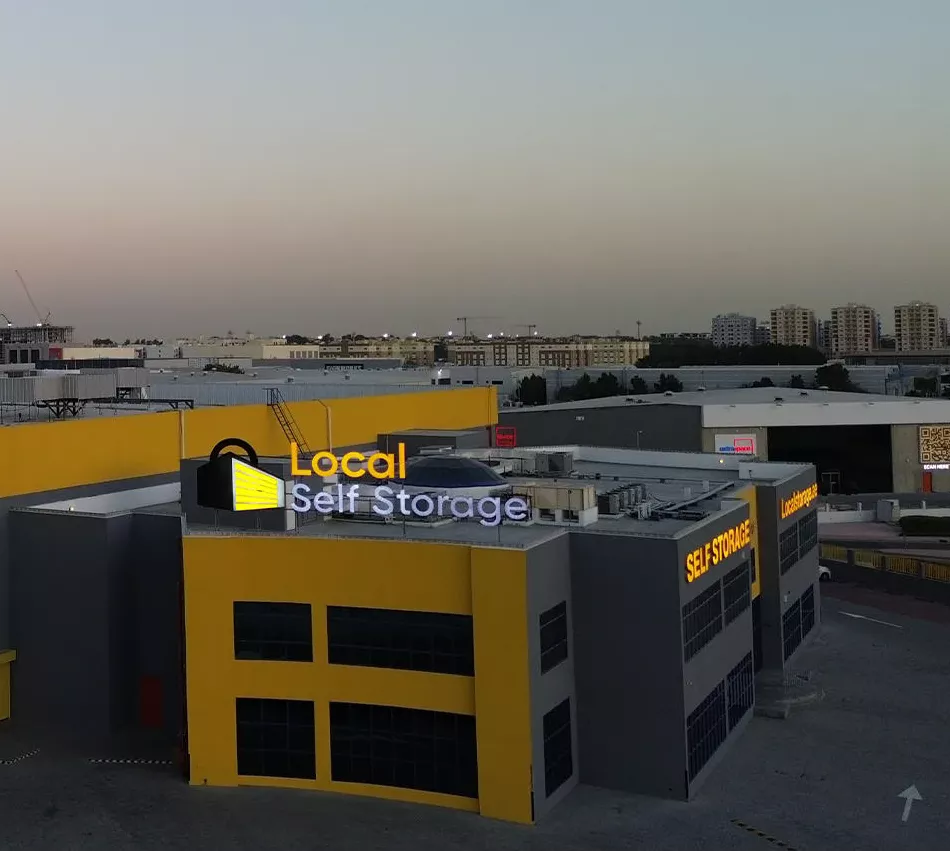
So what happens when your container clears customs, and you’re still in a hotel in Al Barsha? Without a plan, the moving company holds your goods and charges daily warehouse fees. With a storage unit in Dubai booked ahead of time, your shipment goes from the port to a space you control, and you move it into your apartment when you’re ready.
Plenty of expats spend their first one to three months in a furnished apartment or company accommodation. It’s a smart move. You get to test the Sheikh Zayed Road commute at 8 a.m. and visit schools before committing to a neighbourhood. The catch is that furnished places already have furniture, so there’s no room for yours. Storing your belongings for those first months means you can choose a home properly instead of rushing into a lease just to unload boxes.
This is the part people from cooler countries underestimate. Dubai summers regularly top 110°F, and coastal humidity can be punishing. A unit without air conditioning in July is basically an oven.
Wood furniture can warp or crack. Leather dries out. Photos stick together, vinyl records bend, and mattresses and clothes stored in damp air can pick up mildew. When you compare options, ask whether units are air-conditioned 24 hours a day or only during business hours, and whether humidity is controlled too. It costs a little more, but less than replacing a warped dining table.
Most larger facilities sit in industrial areas such as Al Quoz, Ras Al Khor, Dubai Investments Park and around Jebel Ali. If you’ll need regular access, location matters. From Jumeirah Village Circle, Al Quoz is a short drive. From Mirdif, somewhere near Ras Al Khor makes more sense.
Quality varies a lot, so when you call storage companies in Dubai, get clear answers on these points:
You’ll also choose between self storage, where you rent a lockable room and handle everything, and full-service storage, where the company collects, inventories, and warehouses your things, then delivers them later. If you’re starting a new job the same week, full-service saves you hiring movers twice.
Things that sit for months need better packing than a quick move. Use double-walled boxes, not supermarket cartons. Cover furniture with breathable sheets rather than plastic, which traps moisture. Remove batteries from remotes and toys, and leave fridge doors slightly open so nothing grows inside.
Label boxes on two sides and keep a list on your phone. When you need your son’s school uniform from box 34 at 7 p.m. on a Sunday, you’ll be glad you did. Put the things you’ll want first closest to the door.
A lot of people hold on to storage long after the move. Newer Dubai apartments often have tight closets and no garage, so suitcases, winter coats for trips home, camping gear for desert weekends, and the crib you’re saving all fight for space. If you’re on a shorter contract or heading abroad for the summer, it also beats selling everything at a loss and buying it all again later.
The easiest moves tend to start with arranging storage in Dubai before your container leaves port, not after it lands. Get two or three quotes, ask a colleague already in the city to check the facility if you can’t, and get the climate-control terms in writing. Then when the shipping agent calls to say your goods have cleared, you’ll already know where they’re going.
Relocating to Dubai involves a lot of moving parts, and your belongings shouldn’t keep you up at night. A good storage setup gives you room to find the right apartment, settle into work, and get the kids into school without racing against a shipping deadline. Sort it early, choose climate control, and pack with the long haul in mind. Your first few months in the city will feel a lot calmer for it.