
The boxes you use decide the size of unit you need. Which ones are worth having, and how many.
Boxes are the least interesting part of storing anything and the part that decides how much it costs you. A unit packed in uniform boxes holds roughly a third more than the same unit packed in carrier bags, loose crates and whatever came to hand — which means the boxes you use decide the size of unit you need.
This page covers which boxes are worth having, how many you will need, and the things people pack with that they should not.
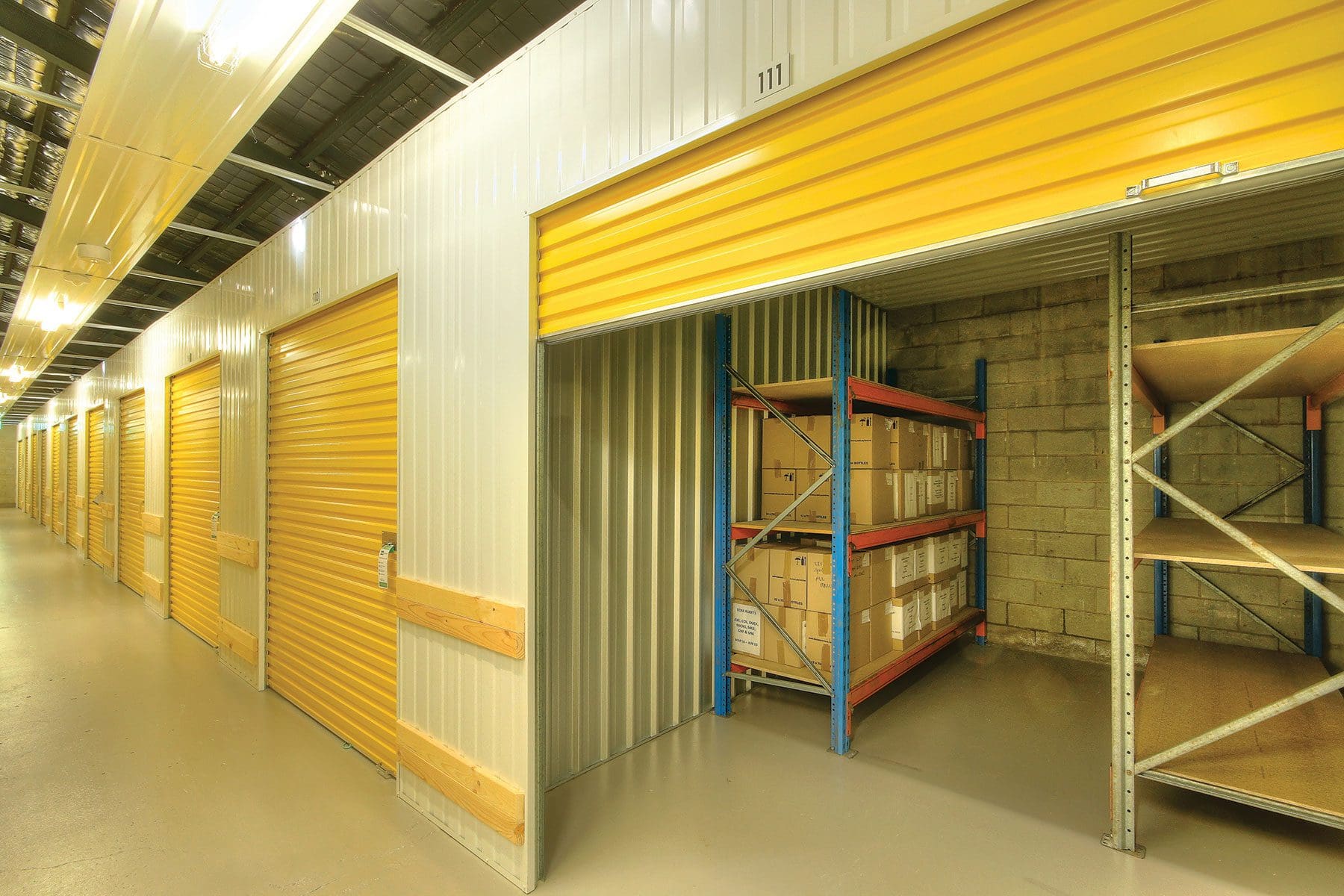
Boxes of the same footprint stack square to the ceiling and hold each other up. Mixed shapes do not: every odd size leaves a void above it, and the stack becomes unstable long before it becomes tall.
That lost space is the whole argument. Supermarket boxes are free, and a unit packed with them will be a size larger than one packed properly. Over a year, the size difference costs considerably more than the boxes would have.
Four types cover almost everything a household or an office needs to store.
Books, files, crockery, tools. Heavy items go in small boxes, because a large box full of books cannot be lifted and will burst at the base.
Kitchen contents, toys, electronics, shoes, most of what is in a cupboard. If you buy one size only, buy this one.
Bedding, cushions, lampshades, winter coats. Light things only — a large box is a trap if you start filling it with anything dense.
Suits, dresses and anything that creases. Clothes travel hanging rather than folded, and come out wearable rather than needing a day of pressing.
Archive boxes with lids are the fifth, if you are storing documents. They are a standard size by design, which is exactly why document storage is the cheapest thing per box to keep — our business storage page goes into that.
Everyone underestimates, and nobody minds having two spare. As a rough starting point: a studio runs to around fifteen to twenty-five boxes, a one-bedroom apartment thirty to forty, and a two-bedroom somewhere past fifty once the kitchen is included. Kitchens and books are what push the number up.
We keep packing supplies on site, which matters more than it sounds. Running short halfway through a Thursday evening is the normal experience of packing, and the alternative to buying more on the spot is another trip across the city. If you would rather not do any of it, the packing and moving team is booked for packing on its own more often than for whole moves.
Books and crockery at the bottom of the stack. This is about the boxes underneath, not about the unit.
A half-full box collapses under the one above it. Pad the gap with linen or paper rather than leaving air.
Two strips along the seam and one across each end. Most box failures are the bottom giving way, not the sides.
Once stacked you can only read the sides. Write the room and two or three contents on every box.
Bin bags and carrier bags tear, slump and cannot be stacked, and they are the single commonest reason a unit turns out to be too small. Plastic crates with lipped lids will not stack flush with anything else. Original appliance cartons are an awkward shape and mostly polystyrene.
The one to be careful with is the sealed airtight box. It is excellent for documents and wrong for fabric and leather, which need to breathe — sealed up in a Dubai summer, an airtight box traps humidity against the thing you were trying to protect.
Beyond boxes: packing tape and a dispenser, bubble wrap for anything fragile, plain paper for filling gaps and wrapping crockery, furniture covers for sofas and mattresses, and a marker pen that will still be legible in a year. Blankets or covers for anything with a surface that scratches.
Wrap soft goods rather than sealing them, keep fittings taped to the furniture they belong to, and dismantle whatever comes apart — a bed frame in pieces takes a fraction of the space it does assembled. Personal storage covers the rest of storing household things well.
Tell us what you are packing and roughly how many rooms, and we will tell you what you actually need rather than a generous estimate. Supplies are here on site, so you can collect more on the day rather than guessing up front.
Our storage units in Dubai page lists the sizes, and the unit size guide shows what fits in each once it is boxed.